ServicesBank Statement Loans
Bank Statement Loans in Taylor, TX
If you work for yourself, your tax returns may show far less than you really bring in. A bank statement loan lets you qualify on 12 or 24 months of deposits instead. We walk you through which deposits count, and why, before anything goes to underwriting.
A home loan that reads income the way self-employed people earn it
Write-offs are smart business. They also shrink the income a conventional lender sees on your tax returns, which can leave a profitable business owner short of qualifying. A bank statement loan looks at the money actually moving through your accounts and builds your qualifying income from those deposits.
These are non-QM loans, which means they sit outside the standard agency guidelines. They still follow federal ability-to-repay rules, and every lender has its own written requirements for how deposits are averaged, what gets excluded and how much documentation is needed. Most of the frustration borrowers feel comes from not knowing those rules until a file gets kicked back.
So we start there. Before you apply, we explain the guidelines in plain language and show you how your statements are likely to be read. You decide with the full picture, not a surprise in week three.

What we handle on a bank statement loan
- 01
A deposit review before you apply
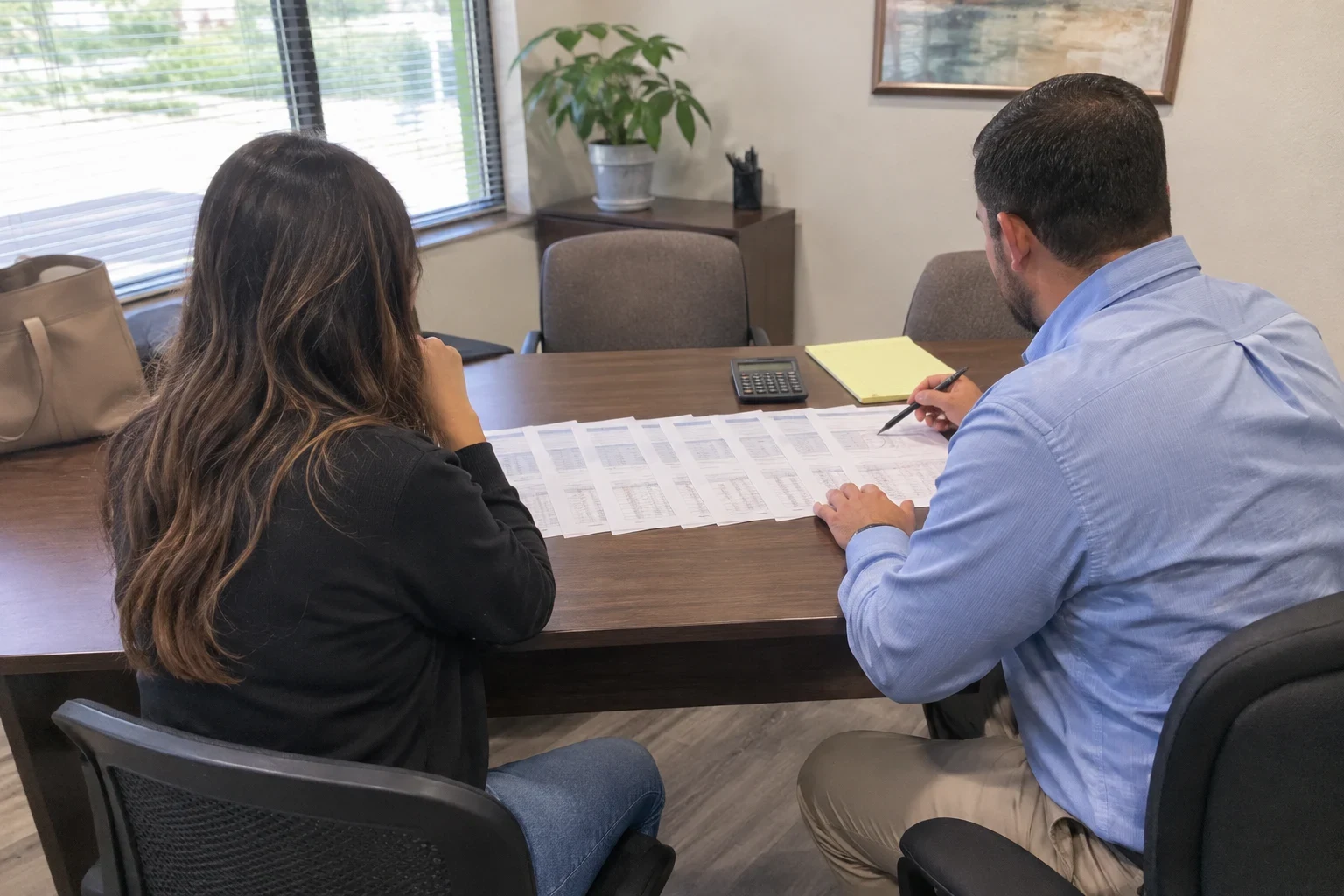
We go through your statements with you and flag anything an underwriter will question, like transfers between your own accounts or a one-time large deposit. Better to sort it out now than mid-file.
- 02
Choosing which accounts to use
Depending on how your money flows, your personal account or your business account may show your income more fully. We run the figures on each and help you pick the one that gives an underwriter the truest picture.
- 03
The expense factor, explained
Business statements are usually reduced by an expense ratio to estimate profit. We explain the standard factor and when a letter from your CPA or tax preparer can support a different number.
- 04
A clear document checklist
You get a list of exactly what is needed: statements, proof of how long you have been self-employed, ID and asset records. No guessing about what comes next.
- 05
Rate quotes you can compare
We quote the bank statement option and, where it makes sense, show how it compares with Conventional Loans or FHA Loans so you can see the tradeoff.
- 06
Support through closing
Your loan officer stays with the file through underwriting, appraisal and closing, and answers conditions as they come up.
Questions about Bank Statement Loans?
Call(512) 601-6937Signs a bank statement loan may fit you
Your write-offs cut your taxable income
Mileage, equipment and home office deductions lower your tax bill. They also lower the income a standard loan will count.
You were turned down for income
A denial because your returns did not support the payment is one of the most common reasons borrowers come to us for this program.
Steady deposits, uneven paperwork
Contractors, real estate agents, consultants and small shop owners around Taylor often have reliable monthly deposits but returns that swing year to year. Averaging 12 or 24 months smooths that out.
You have been on your own for a while
Most programs want to see about two years of self-employment. If you are newer than that, we will tell you honestly what is and is not possible.
You have savings set aside
These loans usually call for a larger down payment and some reserves. If you have built a cushion, you are in a stronger spot to qualify.
How the process works
- 1
A first phone conversation
Tell us what kind of work you do, how clients pay you and whether you are buying or refinancing. From that we can say whether this program is a good match and give you an early sense of rates.
- 2
Statement review and pre-qualification
On a follow-up call we walk through your statements together and work out qualifying income the way an underwriter would. We point out deposits that will need a paper trail.
- 3
Application and underwriting
When you are ready, we complete the full loan application with you over the phone and move it into underwriting. Underwriting checks the statements, your credit and your self-employment history, and we work through any conditions with you.
- 4
Appraisal and approval
The property is appraised, title work is completed and the loan receives final approval. We keep you updated at each stage.
- 5
Closing
Your closing disclosure arrives a few days before the signing so you can read every figure and ask us about anything unclear. On closing day you sign the final documents, and the purchase or refinance funds.
What moves your rate and costs
Bank statement loans generally carry a higher rate than conventional financing because the income is documented differently. How much higher depends on your file. These are the pieces that matter most.
- Down payment
- A larger down payment lowers the lender's risk and usually earns a better rate. Smaller down payments are possible on some programs but cost more.
- Credit score
- Your score affects both whether you qualify and the rate offered. A recent late payment can matter more here than on an agency loan.
- 12 or 24 months of statements
- Some lenders price the two options differently. A longer history can help if your income dipped in one year.
- Reserves
- Having several months of payments left in savings after closing can improve your terms.
- Property and loan type
- A primary residence prices differently than a second home or investment property, and cash-out refinances price differently than purchases.
Bank statement loan questions
Do I need a CPA letter?
Often, yes. Many programs ask for a letter from a CPA or tax preparer confirming that you are self-employed and how long the business has been running. Some will accept other proof instead, such as a state business filing or a DBA record. We will tell you which one your program wants before you spend money on paperwork.
Which deposits do not count as income?
Transfers between your own accounts, loan proceeds, refunds and one-time large deposits that are not business income are usually left out. Unusually large deposits may need a written explanation and a source document. We go over this with you during the statement review.
Can I use both personal and business statements?
Usually you qualify on one set or the other, not a mix. We run the numbers both ways and recommend the one that best reflects what you earn.
How much do I need for a down payment?
It is typically more than an FHA or conventional loan requires, and the exact amount depends on your credit and the property. We will give you a clear number once we see your situation.
Can I refinance into a conventional loan later?
Yes, many borrowers do once their tax returns show enough income to qualify. If that is your plan, we can talk about when it might make sense and what your returns would need to show.
Find out what your deposits qualify you for
Tell us how your business gets paid and we will explain how a bank statement loan would read your income. You will hang up knowing where you stand and what the next step is.