ServicesUSDA Loans
USDA Loans in Taylor, TX
With a USDA loan, eligible buyers can finance the full purchase price and keep their savings for closing costs and moving. Two rules decide it: where the property is located and what the adults living there earn. We check both before you shop and give you a plain answer on fit.
What a USDA loan is and who it suits
A USDA guaranteed loan is a fixed-rate mortgage with a 30-year term, and the U.S. Department of Agriculture stands behind part of it. The program was created so moderate-income buyers could purchase outside large urban centers. That federal guarantee is what allows eligible borrowers to finance the whole price rather than spend years building a down payment.
The trade-off is a set of rules you will not find on other loans, and they are where many buyers stumble. The property has to fall inside an eligible area on the USDA map. Total income from all the adults who will live there must stay below the county limit. And you have to occupy the property as your primary residence. We go through each of these with you before any offer goes out, so nothing catches you off guard on the way to closing.
When USDA turns out not to fit, we say so plainly and line it up against our FHA Loans, VA Loans or Conventional Loans, so you can see which option costs you less over time.
Our part of your USDA loan
Map lookup for each listing
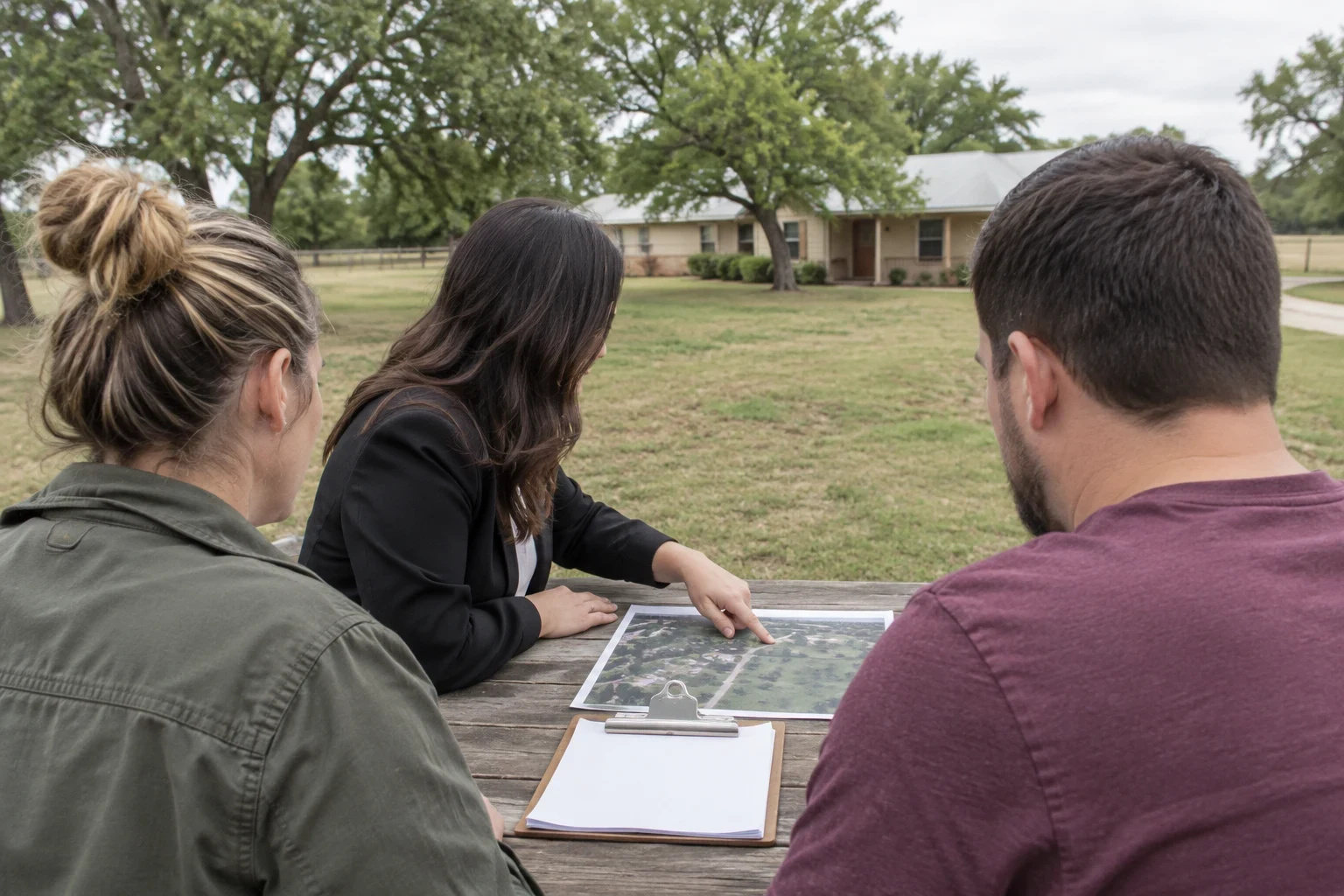
Send us any address that catches your eye and we look it up on the USDA eligibility map while you are still deciding. Eligibility is drawn at the street level, so two properties a few minutes apart can land on opposite sides of the line.
Household income math, done USDA's way
The limit counts pay from every adult who will live at the property, not only the people signing the loan. We add it up the way USDA does and show you where you land against the county limit.
Pre-qualification, then a written pre-approval
We review your credit, income and monthly obligations, and once the numbers check out we put the pre-approval on paper. A buyer whose file has already been looked at usually gets a warmer reception from agents and sellers.
What the appraiser checks
A USDA appraisal goes beyond value and confirms the property is safe, sound and sanitary. We walk you through those standards ahead of time so you can spot likely concerns during showings.
Both guarantee fees, line by line
There is an upfront guarantee fee that most borrowers roll into the loan, plus a smaller annual fee built into the monthly payment. Your written loan estimate lists each one separately.
USDA's review and the run to closing
After our own approval, USDA takes a second look at the file. We prepare that package carefully, track it as it moves and keep you and your agent updated until closing day.

Signs a USDA loan may be the right call
- Saving a down payment is the hard part
- Your income covers a monthly payment, but building up a large down payment is slowing you down. USDA lets eligible buyers skip that step.
- You are looking outside the city center
- You are shopping in smaller towns or on the edges of the metro, such as around Elgin or Hutto. Some addresses in areas like these may qualify, and we check each one.
- Your income is moderate, not high
- USDA is built for buyers below the area income limit. If you earn too much, a conventional loan may serve you better, and we will tell you that.
- You plan to live there
- This loan is for a primary residence only. It does not work for rentals or second properties.
- Your credit is fair but not perfect
- USDA guidelines can be workable for borrowers with modest credit histories, as long as payments have been steady lately.
How the USDA loan process works with us
- 1
A first conversation
We meet by phone, by video or at our office to talk through your income, savings, credit and the areas you are considering. You leave with rate quotes and an honest read on whether USDA is within reach.
- 2
Eligibility and pre-approval
We verify the income limit, collect documents such as pay stubs, W-2s and bank statements, and write your pre-approval. Any addresses you are already watching get checked against the map too.
- 3
Under contract: appraisal and underwriting
After your offer is accepted, we schedule the appraiser and our underwriter reviews the full file. If the appraisal turns up a property concern, we explain what has to be addressed before the loan can proceed.
- 4
USDA review and closing
With our approval in hand, the file goes to USDA for its final sign-off, which takes longer than most loan types. We plan for that in your contract dates from day one and set the closing as soon as USDA responds.
What moves the cost of a USDA loan
Your rate and total cost depend on your own file and the market on the day you lock. We give you a written loan estimate that lists every fee so you can compare it fairly. Here is what shifts the numbers most.
- Credit and payment history
- Stronger credit generally earns a better rate. Recent late payments can raise the rate or require extra documentation.
- Guarantee fees
- The upfront guarantee fee adds to the loan amount if you finance it, and the annual fee is part of each monthly payment. Both are set by USDA, not by us.
- Closing costs and seller help
- USDA allows sellers to contribute toward closing costs, which can lower what you bring to the table. How much help you get depends on what you negotiate.
- Rate lock timing
- Because USDA adds a review step, your lock period may need to be longer. A longer lock can carry a slightly different rate.
USDA loan questions we hear often
- Do I really not need a down payment?
- For eligible borrowers, USDA allows financing up to the full appraised value, so no down payment is required. You will still have closing costs, though seller contributions can cover some of them. We show you the cash you will actually need on your loan estimate.
- How do I know if a property is in an eligible area?
- USDA publishes an eligibility map, and it is set by exact address. Give us the address of any listing you like and we will look it up. Checking before you make an offer saves you from losing time on a property that cannot use this loan.
- Whose income counts toward the limit?
- USDA looks at the income of every adult who will live in the property, even people not on the loan. Someone on the loan alone may still be over the limit once a working adult relative is added. We run the full calculation with you early.
- Is a USDA loan only for farms?
- No. It is a regular home loan for a primary residence, not for working farms or income-producing land. Many eligible areas are suburban or small-town neighborhoods.
- Why does a USDA loan take longer to close?
- The file is reviewed twice, first by us and then by USDA. We plan the closing date around that second review and keep the paperwork clean so it moves through without avoidable delays.
- Can I use a USDA loan to refinance?
- USDA offers refinance options for borrowers who already have a USDA loan. If you have a different type of loan, we can compare a refinance through one of our other programs instead.
Find out if USDA fits your purchase
Tell us the area you are shopping in and a little about your income. We will check eligibility, walk through the rules and give you rate quotes you can compare.